Why I Became Buddhist
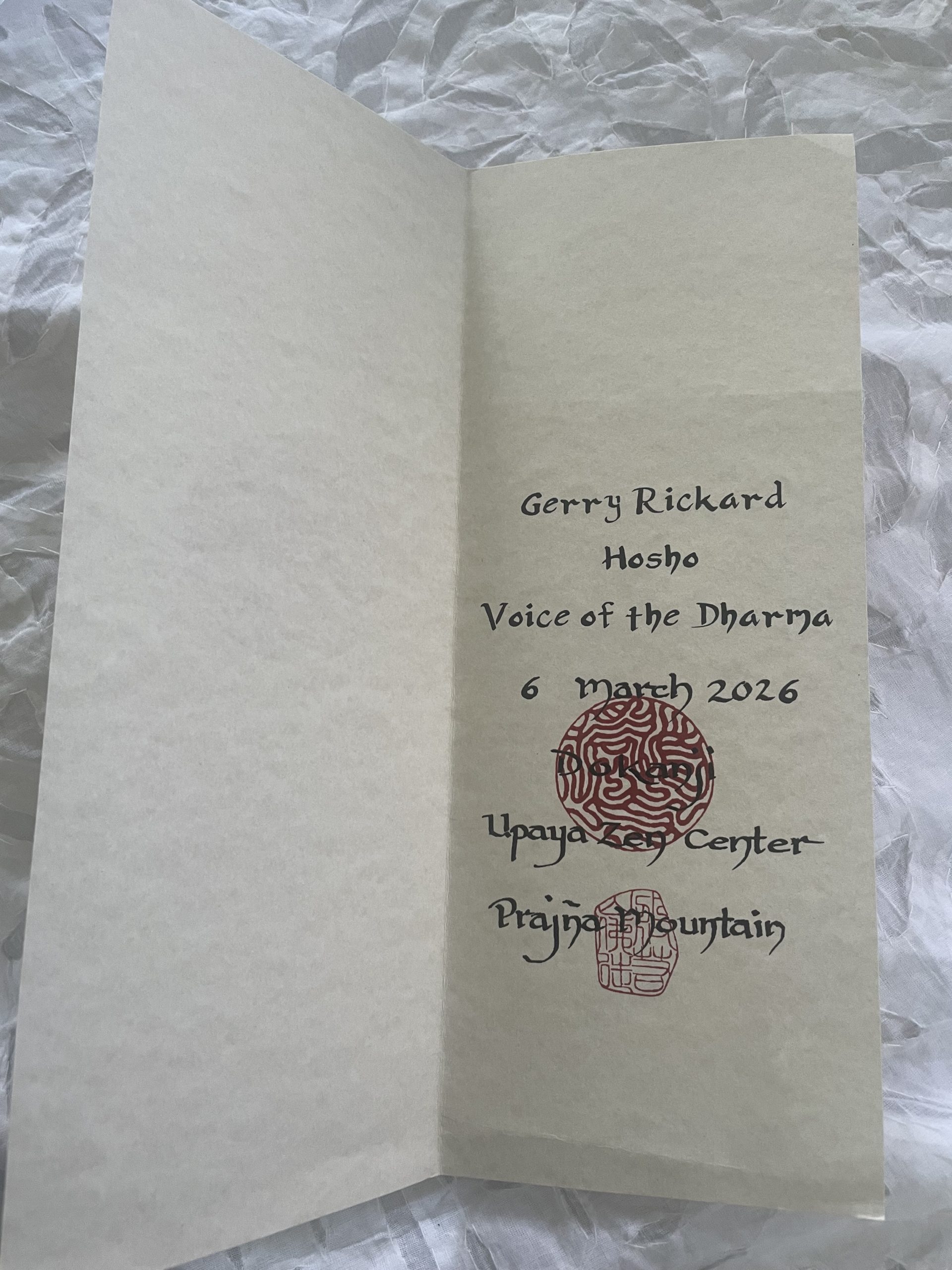
On March 6th I took Buddhist vows.
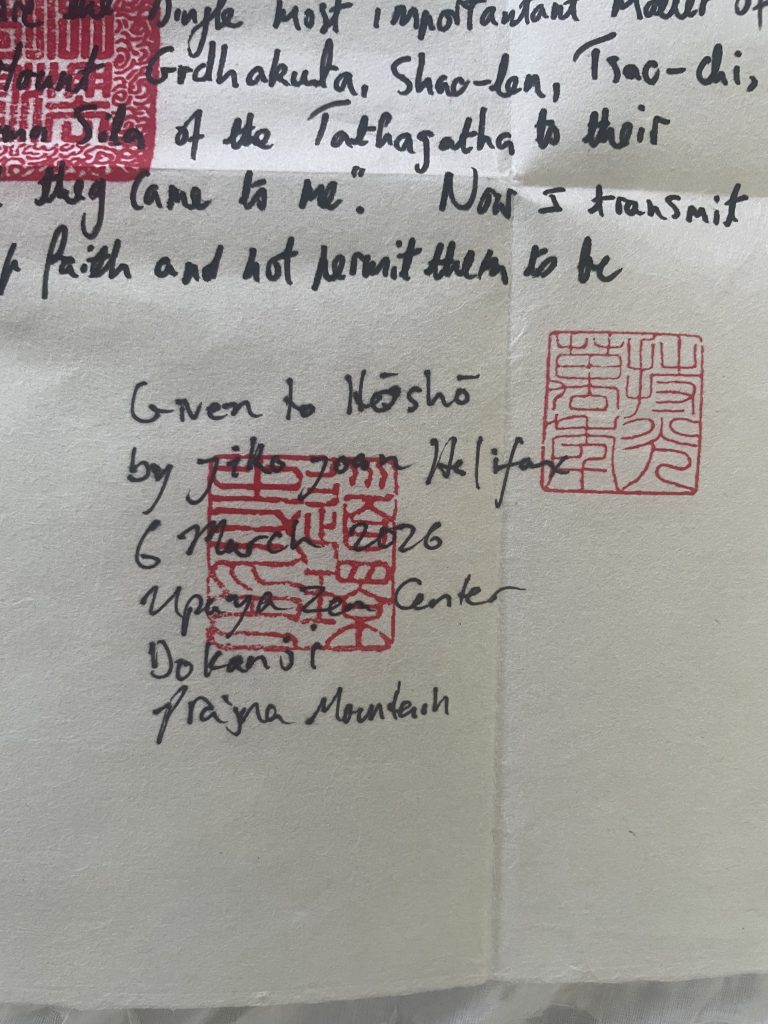
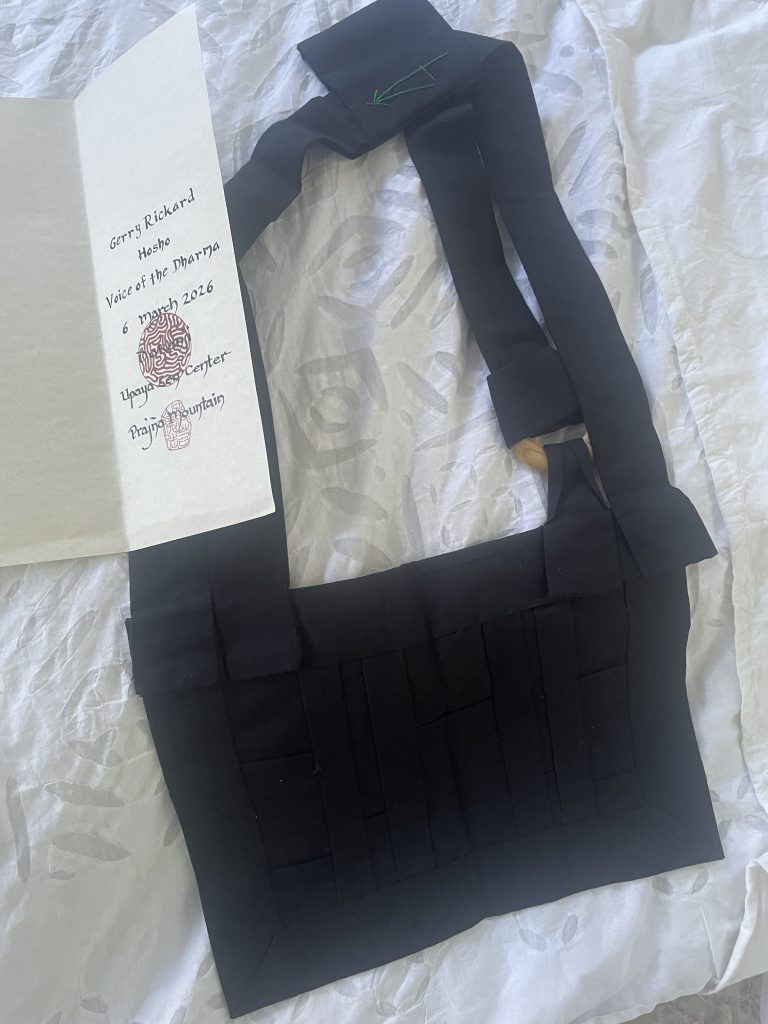
I received what’s known in Zen Buddhism as Jukai, or the Zen precepts, when I partook in an online ceremony led by Roshi Joan Halifax at the Upaya Zen Centre in Santa Fe.
It reflected a journey I have been on for the past several years as a mindfulness and meditation teacher, a journey that has taken many twists and turns along the way. Throughout this path the dharma, or Buddhist teachings, have been a huge influence on my personal life and in the way I teach mindfulness. I cannot ignore the Buddhist roots of these practices, and bring them into my teaching whenever people are open to it; and most are.
Taking the precepts, therefore, was one step further on this journey.
But it’s also very personal. Choosing to live life by these vows is a big deal. It’s like setting your rudder to a moral and ethical compass that will steer your life in a different direction. We live them, not as a list of commandments, but more as guidelines to how to live a life of non-harming and non-violence.
As humans, at some point our rudder will veer off course and we’ll break one of the precepts. But it’s not like there’s a Buddhist hell, where we’ll end up if we don’t confess to the priest. We acknowledge that we have veered off course. We learn from our perfectly imperfect state and we start again. We atone.
Relative and Absolute Views
It’s also more than this.
Buddhist teachings have given me a way to see myself and the world and see myself in the world. Recognizing how my mind works and how it can contribute to my suffering has been invaluable. The journey from staying with the breath to discovering the awareness that is always available to us behind our thoughts has opened up an exploration of what “I” am or, more importantly, what “I” am not.
Letting go of my layers of conditioning, seeing ego-based thoughts for what they are and submerging myself into the ebb and flow of the ever-changing river of life, has been liberating.
From a relative view, the precepts may seem like a list of do’s and dont’s. But it’s more than a list of commandments. They can also be seen from an absolute point of view, each precept representing an awakening to the moment from a place of not knowing—a deep place of awareness. From this place, we know what is needed in this moment, a response that is not ego-based, but comes from a place of meeting what is, as it is, without my opinions, judgments and stories around it. Here, from a place of stillness and awareness, I can bear witness to things as they are. I am opening up to the world as it is, what Dogen describes as, “the 10,000 things.”
In this way, my response is the antithesis of my normal patterns based on analysis, reason, and intellectualising. Rather it is based on compassion for what is here in this moment, without any preconceptions or ideas of “fixing” or “making things right.”
The response is the appropriate one—it may not be what I might have done before, but it is right for the situation at hand. This is the miracle of life by vow. This is living my life wholeheartedly in this moment
We can also look at taking refuge in the Three Jewels, Buddha, Dharma and Sangha from both a relative and an absolute standpoint. From a relative point of view, we respect and honour all three: the Buddha as an awakened being, the dharma as his teachings and the sangha, the community of practitioners. But from an absolute point of view, my life becomes all three.
By taking refuge in my Buddha nature, I can see things as they are (dharma) and, in this seeing, in the realization that there is no self, I see that everything is made up of causes and conditions. Then I am realizing the interconnection of all things (sangha). I am the same as you or anything else. In this way, my student is also my teacher. There is no separation.
It’s not, therefore, about “me” awakening to life as it is, and relieving “my” suffering. This is living life by committing to the Bodhisattva ideal where we vow to awaken and live our lives to benefit others. This is the true spirit of living by vow.
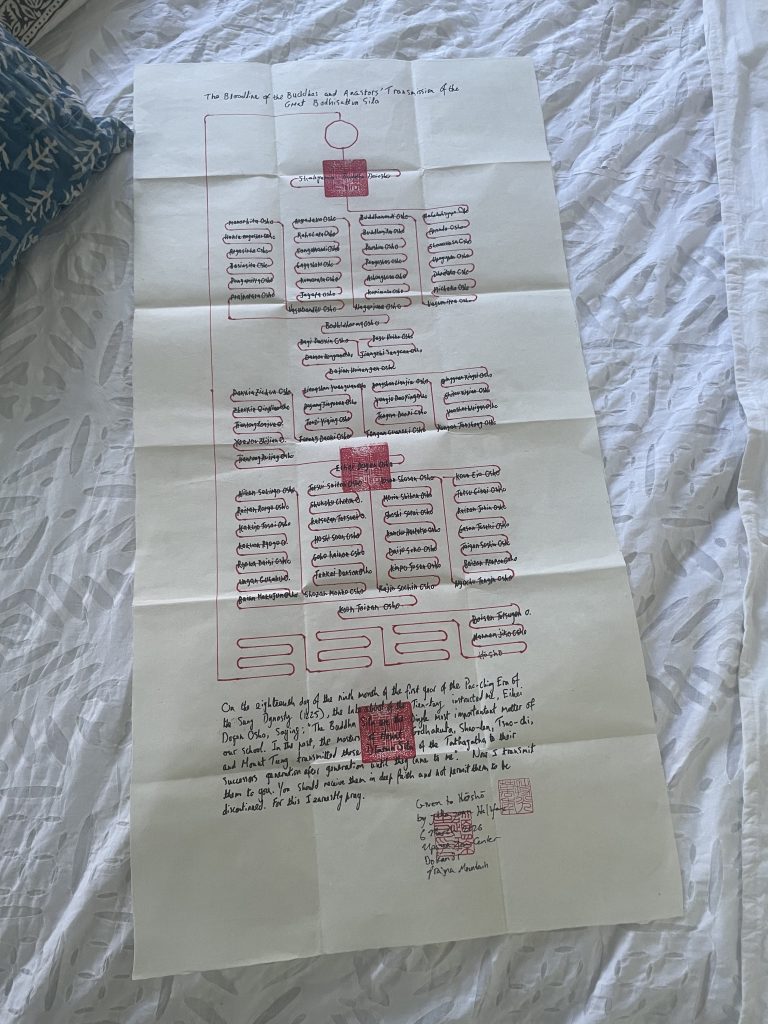
Having studied other lineages, I choze Zen. Why?
I was attracted to the practice of shikantaza, or “just sitting” and especially Dogen’s teachings on practice being enlightenment. I loved the teachings of the Zen masters and their wisdom. But, to be quite honest, I also felt a little “superior” in studying Zen. I fell for the spontaneity of the Zen Master, the “cleverness” of the teachings, the insolvability of the koans. It felt like a more “intellectual” approach to Buddhism.
But somewhere along this path, all of the above has crumbled away. The initial attraction of Zen has become the distraction. It’s a practice that lives deeply in what is here, without the distraction of intellectualising, thinking about, analysing, labelling or conceptualising. All of this can be shunted through the door marked, in Dogen’s words, “dropping off body and mind.”
It’s more about the heart, the feeling, the sensing, the forgetting of everything that we have been taught and living from this place of not knowing. This is true liberation that can’t be described in books or teachings, a place of realizing the teachings and the precepts as my own life as it is right now. It’s allowing myself to give my wholehearted presence to the 10,000 things—a coming home.
My given dharma name is Hōshō, meaning “voice of the dharma.” That’s a big one to follow, but it’s also part of taking the Bodhisattva vow—something which I will continuously try to live up to.
*This article was initially published in The Tattooed Buddha.